
.png)
Power interruptions rarely come with warnings. One day, things run smoothly, and the next day, the daily routines come to a halt.
Machines are turned off, labor is disrupted, and comfort is replaced by frustration. That is when the actual struggle starts, selecting the appropriate generator that satisfies the requirements and financial limits.
Most consumers struggle when deciding whether to buy a petrol or diesel generator because both promise reliable backup power. However, they differ significantly in performance, cost, and long-term usability.
The awareness of these differences eliminates uncertainties and prevents costly errors. This article explains the main differences between petrol and diesel generators and helps the readers arrive at a clear and confident decision.
1. Fuel Type and Availability
The selection of fuel is a defining characteristic in the selection of generators since it influences accessibility, cost, and daily convenience.
Petrol is accessible and readily available in most places, in the fuel stations. This has made petrol generator the kind that usually attracts people who wish to have quick access to fuel without prior planning.
However, diesel is used in heavy machinery and commercial transport to a large extent. This is why it is usually supplied in large quantities and has a longer shelf life.
This renders diesel generators desirable to the user who would want to have long-term backup or in those regions where fuel storage can be challenging.
Petrol is efficient in the short term, or for rare use, whereas diesel is reliable when the power outages are prolonged.
Ultimately, the availability of fuel, as well as its storage, is what determines the best option. Selecting the appropriate fuel balances the comfort of life with the anticipation of the long run.
2. Power Performance and Power Output
Power demand is highly dependent on usage. Some users only need electricity for running basic appliances, whereas others have to have power constantly to operate numerous systems.
The power output of petrol generators is typically low to moderate power. Thus, they are appropriate in residential, small shops and infrequent use applications.
Diesel generators, on the other hand, are configured to work at higher loads. They are effective in operating continuously and have a stable performance during long hours. This makes them fit in industrial facilities, hospitals, and business premises where constant power is essential.
Essentially, petrol generators are most effective in lighter, shorter tasks, whilst diesel generators are more effective in heavy-duty and long-duration tasks. The ability to match the generator capacity with the real power requirement is another way of making sure that it is efficient and long-lasting.
3. Operation Costs and Expenses
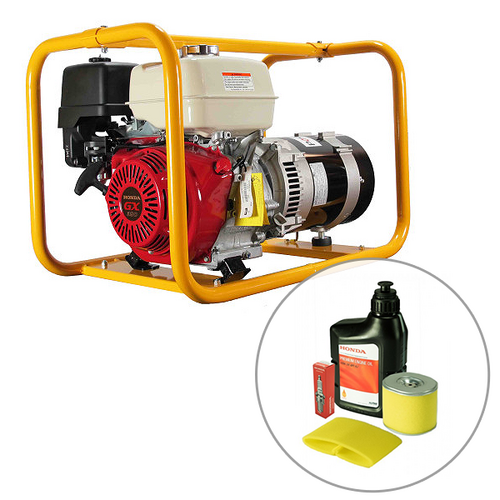
Purchasing behavior is usually affected by initial cost. The initial cost of petrol generators is usually lower.
The low cost makes it suitable for first-time customers and those who have less power needs. In the short term or in case of emergency, the cheaper investment is viable.
Petrol generators provide a cost-effective solution for users who prioritize affordability and flexibility in usage patterns. Fuel consumption remains predictable for typical residential or occasional operation.
Diesel generators are more expensive at the time of purchase but come with higher fuel efficiency. They generate greater power efficiency per liter of fuel, which saves money in the long run.
Moreover, diesel generators are designed to be robust, and this reduces the frequency of maintenance and the cost of repair.
Therefore, petrol generators are appropriate for people who are interested in short-term affordability, whereas diesel generators are appropriate for long-term or regular users. The comparison of purchase and operating cost results in wiser financial decision-making.
4. Maintenance and Durability
The overall user experience directly relates to the maintenance requirements.
The petrol generators have fewer parts, and their engines are simpler; they are easy to maintain. Regular servicing entails the change of oil, replacement of spark plugs, and cleaning of air filters.
Petrol generators are well-suited for scheduled and intermittent use, offering reliable performance when maintained as recommended. Their design supports ease of servicing and user-friendly operations.
The diesel generators are constructed for durability. They operate with compression ignition, which does not require any spark plugs and additionally minimizes the mechanical complexity. Consequently, diesel engines can last longer without strain.
Despite the fact that diesel generators need high-quality and skilled servicing, their extended service intervals compensate for these requirements. Their strong structure in the course of time makes them reliable in harsh conditions.
Petrol generators are suitable for light usage with less maintenance, whereas diesel generators provide durability in consistent and long-term usage.
5. Noise Levels and Environmental Impact

Noise and emissions are important considerations, particularly in residential or confined settings. Generators that use petrol are less noisy and can be used in homes and small offices. Their small size also helps put their noise output down.
Diesel generators have higher compression ratios, creating more noise. This may be an issue in residential communities or places that are sensitive to noise. Diesel models are, however, fitted with soundproof enclosures that minimize noise.
Both petrol and diesel generators now comply with evolving emission standards, with newer models designed for cleaner and more efficient operation. Petrol generators tend to produce fewer particulate emissions, while diesel generators use advanced emission control technologies to manage and reduce emissions.
When choosing between the two, consider both noise sensitivity and environmental regulations. Petrol generators are effective where a quiet operation is required, whereas diesel generators are applicable to controlled or industrial settings.
6. Practical Applications and Use Cases
The selection of the appropriate generator is finally determined by the intended use and location.
Petrol generators are perfect in households, outdoor events, and also as a backup in cases of emergencies. They are conveniently used for occasional power requirements due to their portability and ease of use.
Diesel generators are well-suited for commercial, industrial, and institutional applications. They assist in uninterrupted operations and deal with a large load. Diesel is reliable in businesses where a continuous power supply is needed.
Moreover, diesel generators have been found to work well in isolated locations that require fuel storage. On the other hand, petrol generators are more suitable for people who value flexibility and mobility.
The compatibility between the generator type and the real use cases helps buyers to prevent unnecessary spending and uncertainty. The final decision must always be based on practical application.
Final Thoughts
Petrol and diesel generators provide reliable power solutions, but they satisfy distinct needs. Petrol generators are cheaper, portable, and easy to use in short-term processes.
Diesel generators offer efficiency, durability, and long-term reliability to challenging environments. Knowledge of the fuel type, performance, cost, maintenance, noise, as well as its use cases, makes the process of decision-making easier.
With keen consideration of these factors, consumers can choose a generator that fits their needs without any compromise. The right generator is not just a backup system, but a source of assurance when power matters most.